
Highways serve as the central arteries of modern transportation, carrying millions of passenger cars, commercial delivery trucks, and long-distance travelers every single day. Yet, the high speeds and dense traffic that define freeway driving also elevate the consequences of minor mechanical failures and unexpected collisions. A minor disturbance on a quiet suburban street can rapidly transform into an urgent, high-stakes situation when it occurs on an Interstate shoulder. Understanding how to handle these moments requires clear thinking, technical awareness, and a structured approach to safety, repairs, and legal protection.
Every vehicle owner eventually faces a moment of unexpected roadside trouble. Whether dealing with an overheating radiator, a sudden tire blowout, or an unavoidable multi-car pileup, the choices made in the first few minutes set the trajectory for everything that follows. From immediate physical safety on the highway shoulder to long-term financial recovery through administrative claims, motorists benefit enormously from a clear, methodical plan. This comprehensive manual breaks down the essential steps every driver must know to navigate breakdowns, secure immediate assistance, manage vehicle repairs, and protect their legal rights from start to finish.
Table of Contents
- Priority Steps for Shoulder Safety
- Spotting Signs of Mechanical Failure Early
- Securing Professional Vehicle Recovery
- Resolving Key Failures and Access Issues
- Exhaust System Integrity and Noise Control
- Navigating Engine Diagnostics and Complex Repairs
- Addressing Specialized Diesel System Requirements
- Understanding Insurance Coverage and Claim Processing
- Managing Interim Transportation Needs
- Legal Representation After Serious Collisions
- Essential Roadway Readiness for Every Driver
Priority Steps for Shoulder Safety
When a vehicle begins losing power or exhibiting erratic behavior on a high-speed road, the primary objective is reaching a safe stopping location. Drivers should resist the urge to stop immediately in an active lane of traffic, as stationary vehicles on open freeways create extreme collision hazards. Instead, activating hazard lights signals intent to surrounding traffic while slowly guiding the vehicle toward the right-hand shoulder or an off-ramp. If the vehicle can reach a well-lit parking lot or highway rest area, that option is always safer than resting inches away from traffic moving at seventy miles per hour.
Once parked, safety protocols must adjust based on traffic density and geography. On busy highways, remaining inside the vehicle with seatbelts securely fastened provides structural protection against secondary collisions. However, if the car comes to rest near a guardrail with space to step away safely, moving passengers behind the barrier offers superior security. Displaying reflective triangles or flares behind the bumper alerts oncoming drivers, particularly during low-visibility night hours. Preparing for a sudden roadside emergency requires keeping a basic safety kit in the trunk, including a flashlight, jumper cables, water, and high-visibility vests. These simple precautions turn a chaotic event into a controlled situation.
Spotting Signs of Mechanical Failure Early

Vehicles rarely suffer catastrophic failures without issuing warning signals beforehand. Attentive drivers who notice subtle changes in vehicle performance can often prevent full roadside breakdowns before they happen on open roads. Subtle vibrations through the steering wheel, unusual exhaust odors, or altered pedal responsiveness all point toward underlying mechanical fatigue that demands prompt professional evaluation before attempting long road trips.
Stopping power remains the single most critical safety system on any motor vehicle. When a driver presses the pedal and feels a soft, spongy response or hears a high-pitched metallic squeal, the system is actively signaling wear or hydraulic pressure losses. Neglecting these symptoms dramatically increases stopping distances and heightens the risk of high-speed collisions during sudden traffic slowdowns. Ensuring that the vehicle’s brakes receive routine inspection—including pad thickness checks, rotor resurfacing, and fluid flushes—prevents dangerous failures when quick stops become necessary. Similarly, monitoring tire tread depth and inflation pressures guarantees that friction systems can transfer force effectively to the road surface. Taking proactive maintenance steps keeps minor wear from escalating into major highway emergencies.
Securing Professional Vehicle Recovery
When a vehicle cannot continue under its own power, moving it away from dangerous highway shoulders requires specialized equipment. Attempting to pull a stalled vehicle with regular passenger cars or improper straps is extremely hazardous and illegal on most controlled-access highways. Professional recovery operators possess the heavy machinery, training, and lighting equipment necessary to clear vehicles swiftly while maintaining overall scene safety.
Selecting reliable towing services involves considering vehicle type, distance, and transport methods. Flatbed tow trucks are generally preferred for all-wheel-drive vehicles, luxury models, and cars with severe wheel or suspension damage, as they elevate the entire chassis off the pavement to prevent drivetrain stress. Traditional wheel-lift trucks work well for standard two-wheel-drive vehicles over shorter distances. Drivers should verify that the towing operator carries proper insurance and provides clear itemized estimates prior to hookup. Communicating precise location markers—such as highway mile posts, nearest exits, or prominent landmarks—helps dispatchers send assistance promptly, minimizing the time passengers spend waiting in high-risk shoulder zones.
Resolving Key Failures and Access Issues

Modern automotive technology offers unprecedented convenience, but it also introduces technical vulnerabilities. Electronic key fobs, proximity sensors, and transponder ignition systems have largely replaced simple mechanical keys. When these electronic components fail, lose battery charge, or accidentally get locked inside a trunk during an interstate pit stop, a driver can find themselves stranded just as effectively as if the engine had seized entirely.
Resolving lockouts or electronic key miscommunications requires specialized automotive locksmith services or dealership support. Standard door wedges and wire tools can easily damage delicate side-curtain airbags, weather seals, and electronic wiring inside modern vehicle doors. Obtaining replacement car keys on the spot often involves programming high-security transponder chips that communicate directly with the car’s engine control unit. Motorists can avoid long delays by keeping a spare physical key blade hidden in a secure wallet or using manufacturer smartphone applications designed for remote unlocking. Knowing the vehicle’s specific key programming requirements helps drivers communicate clearly with mobile locksmiths during an unexpected lockout.
Exhaust System Integrity and Noise Control
An often-overlooked aspect of vehicle maintenance involves the exhaust system, which carries high-temperature toxic gases away from the engine bay while dampening combustion noise. Drivers frequently ignore minor exhaust rattles or deep rumbling sounds under the chassis, assuming they represent cosmetic or acoustic issues rather than serious mechanical concerns. However, a compromised exhaust system poses subtle but serious safety hazards during long highway drives.
Corrosion from road salt, moisture, and debris can cause cracks in exhaust pipes or loose baffles inside the silencer housing. Scheduling timely muffler repair ensures that dangerous carbon monoxide fumes do not leak upward through floorboards into the passenger cabin, where they cause drowsiness and impaired reaction times. Furthermore, a loose exhaust component can drag along the asphalt at high speeds, creating sparks that threaten fuel lines or detach completely to become hazardous road debris for following drivers. Keeping the exhaust manifold, catalytic converter, and tailpipes firmly secured maintains engine backpressure, protects fuel efficiency, and prevents sudden mechanical hazards on open highways.
Navigating Engine Diagnostics and Complex Repairs
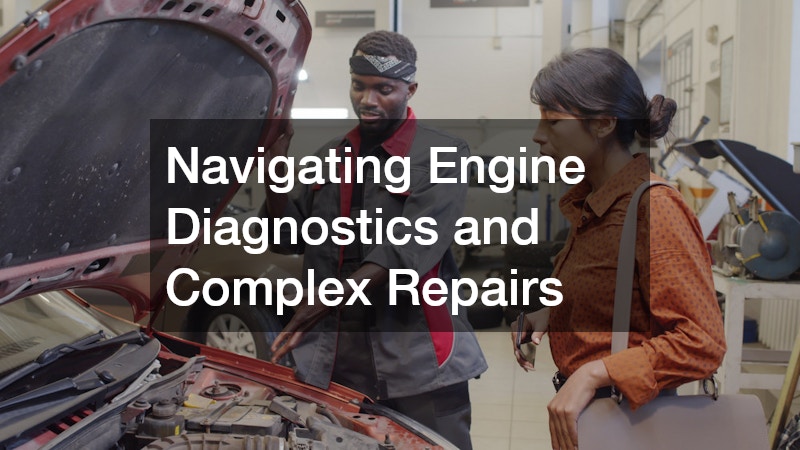
Under the hood of a modern automobile lies a complex network of mechanical, electronic, and thermal control systems. When an engine overheats, loses oil pressure, or experiences internal component timing failures, continuing to drive even a short distance can turn a simple repair into total engine destruction. Recognizing severe engine distress signals allows drivers to shut off the ignition before catastrophic internal damage occurs.
When major mechanical breakdowns occur on the highway, diagnostic procedures must identify whether the root cause stems from cooling failures, fuel delivery issues, or sensor malfunctions. Qualified technicians performing car engine repairs utilize diagnostic scanners to read trouble codes, measure compression, and check thermal integrity. Complex issues—such as blown head gaskets, snapped timing belts, or damaged internal bearings—require systematic teardowns and precision machining. Vehicle owners should request detailed written estimates that distinguish between original equipment parts and aftermarket alternatives. Investing in accurate diagnosis and quality repair work restores powertrain reliability, ensuring the vehicle can withstand the heavy stresses of daily high-speed commuting.
Addressing Specialized Diesel System Requirements
Diesel engines are celebrated for their durability, high torque output, and fuel efficiency, making them the preferred choice for heavy-duty pickup trucks, commercial vans, and towing vehicles. However, diesel powertrains operate under significantly higher compression ratios and feature unique fuel delivery systems that demand specialized technical care compared to standard gasoline engines.
When a diesel truck experiences power loss or excessive exhaust smoke on the highway, standard automotive troubleshooting methods may prove insufficient. Quality diesel repair requires expertise in high-pressure common rail fuel injectors, turbocharger boost systems, glow plugs, and modern diesel particulate filters. Contaminated fuel or water intrusion into diesel fuel lines can rapidly ruin expensive injection pumps, leaving drivers stranded with heavy loads. Furthermore, exhaust fluid management systems must be serviced routinely to prevent automatic engine speed derating. Transport operators and heavy-vehicle drivers must partner with certified diesel technicians who possess the dedicated diagnostic software and heavy-duty shop equipment required to keep these powerful engines operating safely.
Understanding Insurance Coverage and Claim Processing

Following a highway collision or severe breakdown incident, administrative management becomes just as critical as mechanical repairs. Interacting with insurance adjusters, gathering documentation, and filing claims accurately determines how much out-of-pocket expense a driver will ultimately incur. Clear documentation collected at the scene—including photographs of vehicle positions, road conditions, and third-party details—forms the foundation of any successful insurance claim.
A thorough examination of an active insurance policy reveals specific coverage limits, deductible structures, and optional endorsements like roadside assistance or glass coverage. Comprehensive coverage protects against non-collision events such as falling debris, weather damage, or animal strikes, whereas collision coverage handles impacts with other vehicles or fixed barriers. Drivers must report incidents promptly to meet contractually mandated filing deadlines. Understanding how claims adjusters evaluate vehicle depreciation, repair labor rates, and total loss thresholds helps policyholders advocate effectively for complete financial reimbursement. Staying organized with detailed records of all communication ensures that the compensation process moves forward smoothly without unnecessary administrative delays.
Managing Interim Transportation Needs
When a primary vehicle enters an auto body shop or mechanic garage for extensive repairs following a collision, personal and business mobility takes a major hit. Families, contractors, and service businesses cannot simply pause their daily operations while waiting weeks for backordered auto parts or structural alignment work. Finding immediate, practical temporary transportation becomes a top priority.
For businesses carrying tools or large families accustomed to generous passenger space, standard sedan rentals often fail to meet daily utility needs. Securing a van rental provides the cargo volume or seating capacity required to maintain routine operations without interruption. Many insurance policies include rental reimbursement coverage that pays a fixed daily rate toward temporary replacement vehicles while primary cars undergo covered repairs. Coordinating directly with rental agencies that offer direct billing options to insurance companies eliminates out-of-pocket friction. Having a flexible temporary vehicle keeps work schedules intact and personal routines running smoothly while mechanics restore the damaged primary car.
Legal Representation After Serious Collisions
High-speed highway collisions often result in severe physical injuries, significant property loss, and complicated legal disputes regarding fault. Insurance companies often move quickly to offer initial settlements that fail to account for long-term medical costs, physical therapy, or lost future earning capacity. Navigating personal injury law without professional guidance leaves crash victims vulnerable to unfair financial outcomes.
Partnering with an experienced motor vehicle accident law firm gives injured parties the resources necessary to level the playing field against insurance adjusters. Legal specialists investigate accident scenes, analyze crash data recorders, interview witnesses, and consult accident reconstruction experts to establish liability clearly. They handle all communication with opposing legal teams and insurance companies, ensuring victims do not make statements that compromise their claims. Furthermore, legal counsel calculates the full economic and non-economic impact of the incident, pushing for settlements that cover existing medical bills, ongoing rehab, vehicle replacement, and emotional distress. Having dedicated legal representation allows injured motorists to focus fully on physical recovery while professionals manage complex settlement negotiations.
Essential Roadway Readiness for Every Driver
Long-term driving safety relies on continuous preparation, preventive vehicle maintenance, and knowing how to respond when unexpected emergencies occur. Whether dealing with minor mechanical failures or major multi-vehicle crashes, staying calm and following structured safety protocols reduces risks for everyone on the road.
Taking time to review insurance policies, maintaining a basic emergency kit in the vehicle, and establishing relationships with trustworthy repair facilities ensures that drivers are never caught completely off guard. Vehicle ownership comes with inherent risks, but proactive steps significantly reduce stress and financial strain during unexpected breakdowns. By prioritizing safety on the shoulder, seeking qualified repair specialists, and protecting legal rights when collisions happen, motorists can travel with peace of mind. Preparation transforms challenging highway situations into manageable events, ensuring drivers and passengers arrive safely at their destinations every time.
