
- Key Takeaways:
- What Does It Mean When the Brake Pedal Goes to the Floor?
- Why Isn’t the Car Failing Completely?
- How Do You Know if It’s a Hydraulic Problem?
- Common Causes Explained
- How Dangerous Is It?
- Can You Drive Like This Temporarily?
- DIY Checks You Can Perform
- When to Call a Mechanic
- Preventive Maintenance Tips
- Wrapping It Up
Key Takeaways:
- A brake pedal that goes to floor but still stops often indicates hydraulic or component issues.
- Common causes include air in lines, worn master cylinder, brake fluid leaks, and expanding hoses.
- While your car may still stop, braking efficiency is compromised, and emergency response can be affected.
- Simple checks like fluid level inspection and pedal feel tests can help identify problems early.
- Professional inspection is crucial to address safety concerns and prevent serious failures.
- Preventive maintenance is the best way to avoid soft pedal problems in the future.
Hitting the brake pedal and feeling it sink to the floor while you’re driving is seriously unnerving—even if you manage to stop without issue. The good news is that, in many cases, this issue doesn’t mean your brakes have failed completely—but it’s a warning sign you shouldn’t ignore. Understanding why your brake pedal goes to floor but still stops is key to keeping yourself and others safe on the road.
In this guide, we’ll explore the most common causes, how to troubleshoot the problem, and what you can do to prevent future issues.
What Does It Mean When the Brake Pedal Goes to the Floor?
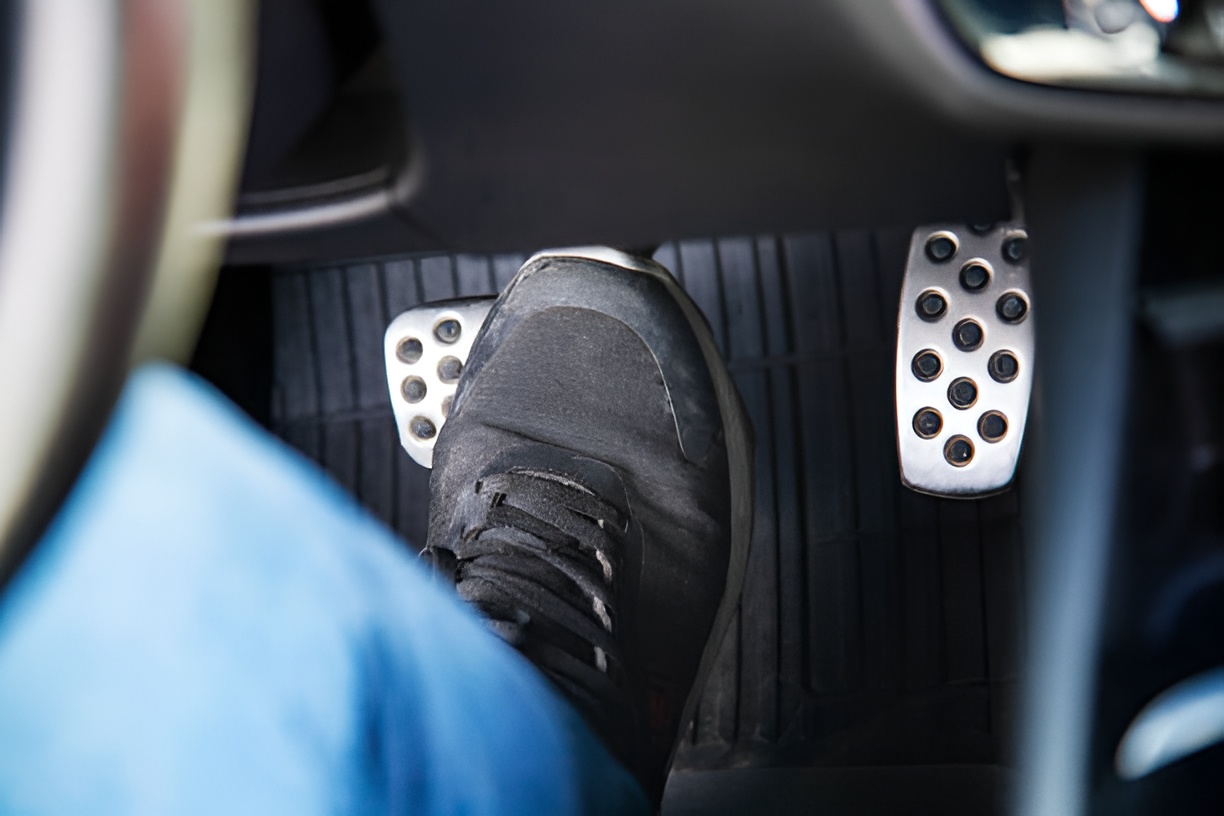
A brake pedal that sinks to the floor while still stopping your car usually indicates a problem in the hydraulic system. The brakes may work, but the pedal movement is excessive, signaling inefficiency somewhere.
Here’s what could be happening:
- Air in the brake lines – Air compresses differently than brake fluid, causing the pedal to sink.
- Worn brake components – Parts like the master cylinder or brake pads may be degrading.
- Fluid leaks – Even a small leak can allow fluid to escape, affecting pedal feel.
- Flexible brake hoses expanding – Rubber hoses may swell under pressure, letting the pedal sink.
Even though your car still stops, these issues can worsen over time and may reduce braking efficiency in an emergency. Recognizing that your brake pedal goes to floor is the first step in preventing more serious brake problems.
Why Isn’t the Car Failing Completely?
You might wonder, “If my brake pedal goes to floor but still stops, why isn’t the car failing?”
The reason is redundancy built into modern braking systems:
- Most cars have a dual-circuit master cylinder, which divides braking power between the front and rear brakes.
- Even if one circuit is slightly compromised, the other can still stop the vehicle.
- Brake pads and rotors provide friction that can compensate temporarily for hydraulic issues.
While this redundancy is helpful, it’s not a reason to ignore the problem. The braking system is operating below optimal performance, which could be dangerous in heavy traffic or emergency situations.
How Do You Know if It’s a Hydraulic Problem?
A brake pedal that goes to the floor is often related to the hydraulic system. Here’s how to identify it:
- Soft or spongy pedal: If pressing the pedal feels mushy, air might be trapped in the lines.
- Slow return: The pedal doesn’t spring back quickly, suggesting fluid flow issues.
- Noises: Hissing or unusual sounds when pressing the pedal can indicate leaks or air pockets.
- Fluid check: Inspect your brake fluid reservoir. Low fluid often points to leaks or worn components.
If you notice these signs, it’s best to address the issue immediately. Even a small hydraulic problem can escalate to a full brake failure if left untreated.
Common Causes Explained
1. Air in the Brake Lines
Air in the brake lines is one of the most frequent reasons for a sinking brake pedal. When air enters the system, it compresses under pressure, unlike brake fluid.
Symptoms include:
- Pedal goes to floor easily
- Brakes feel spongy or soft
- Reduced braking responsiveness
Solution: Bleeding the brakes removes air pockets and restores pedal firmness. This can be done at home if you have experience or by a professional mechanic.
2. Worn Master Cylinder
The master cylinder is the heart of your braking system. It pressurizes the fluid that actuates the brakes. A worn or failing master cylinder can cause the pedal to go to the floor while brakes still function partially.
Signs of a failing master cylinder:
- Brake pedal sinks slowly to the floor
- Fluid leaks around the master cylinder
- Warning lights on the dashboard
Replacing a master cylinder is typically a job for a qualified mechanic, as it involves handling the vehicle’s entire hydraulic system.
3. Brake Fluid Leaks
Brake fluid leaks reduce system pressure and make the pedal feel soft. Leaks can occur at:
- Brake lines
- Calipers
- Wheel cylinders
- Master cylinder
What to do: Inspect for wet spots under the car, especially near the wheels. If you find a leak, address it immediately—driving with low brake fluid is unsafe.
4. Expanding Rubber Hoses
Over time, flexible brake hoses can swell due to repeated use and exposure to heat. This expansion absorbs some of the pedal force, causing it to sink.
Detection tips:
- Inspect hoses for cracks or bulges
- Notice a slow return of the pedal after pressing
Replacing worn hoses can restore proper pedal feel and braking efficiency.
5. Worn Brake Pads or Shoes
While worn pads usually result in longer stopping distances rather than a sinking pedal, severe wear can contribute to the pedal going deeper than normal.
Signs of worn pads:
- Grinding or squeaking noises
- Visual inspection shows thin pads
- Brake performance diminishes over time
Replacing brake pads is a standard maintenance procedure that ensures both stopping power and pedal feel are optimized.
How Dangerous Is It?
A brake pedal that goes to the floor but still stops is not immediately catastrophic—but it’s a serious warning sign. Here’s why:
- Braking distances may increase during heavy stops
- Emergency braking could fail if the system deteriorates further
- You may not notice reduced efficiency until it’s too late
Even if your brakes still function, scheduling a professional inspection is highly recommended. Safety should always come first.
Can You Drive Like This Temporarily?
In some cases, driving short distances with a pedal that sinks slightly is possible—but it comes with risks.
Precautions if you must drive:
- Maintain extra space between your car and others
- Avoid high-speed driving or heavy traffic
- Test brakes gently in a safe area to gauge response
- Do not drive long distances—get the car checked ASAP
Remember, this is a temporary measure. Hydraulic issues can worsen quickly and unpredictably.
DIY Checks You Can Perform
While major repairs require a mechanic, you can perform some simple checks at home:
- Brake fluid level: Ensure it’s at the proper level; top off if low.
- Visual inspection of hoses and lines: Look for cracks, leaks, or bulges.
- Pedal feel test: Pump the brake pedal with the car off to see if pressure builds normally.
- Check brake pads: Peek behind the wheel to see if pads are too thin.
These checks won’t fix the problem but can help identify the source and keep you informed before visiting a professional.
When to Call a Mechanic
Call a mechanic immediately if you notice:
- Brake pedal goes all the way to the floor suddenly
- Visible fluid leaks under the car
- Brake warning lights on the dashboard
- Soft pedal combined with reduced stopping power
Professional mechanics can:
- Bleed brake lines to remove air
- Replace master cylinders or hoses
- Inspect and replace worn pads or rotors
- Pressure-test the hydraulic system for hidden issues
Preventive Maintenance Tips
Preventing brake issues is better than reacting to them. Here are some tips:
- Check brake fluid regularly – Monthly inspections help spot leaks early.
- Replace brake fluid as recommended – Old fluid can absorb moisture, reducing efficiency.
- Inspect hoses and lines – Replace any that are cracked, bulging, or leaking.
- Routine brake inspections – Have a professional check pads, rotors, and master cylinder annually.
- Drive gently – Avoid excessive hard braking, which accelerates wear.
Regular maintenance ensures that your brakes feel firm, respond consistently, and reduce the risk of pedal issues.
Wrapping It Up
Seeing your brake pedal sink to the floor is alarming, but understanding why it happens can ease some of that stress. Most of the time, these issues are manageable with proper maintenance or minor repairs.
However, don’t take it lightly. Even if your brakes still stop the car, underlying problems in the hydraulic system or worn components can quickly escalate into dangerous situations.
Regular inspections, timely repairs, and attention to brake fluid and pads will keep your vehicle safe and ensure that your brake pedal feels firm and reliable every time you press it.
Brake safety isn’t just about stopping; it’s about peace of mind and protecting yourself, passengers, and others on the road.
