
A vehicular collision is often a chaotic and disorienting event, but the choices made in the immediate aftermath set the trajectory for the entire recovery process. Once driver and passengers are verified to be uninjured and in a safe location away from oncoming traffic, securing the vehicle becomes the top priority. Moving the automobile off the main thoroughfare prevents secondary collisions and allows emergency personnel clear access to the scene. If the vehicle is disabled or unsafe to operate due to fluid leaks, deployable airbag activation, or structural compromise, calling a professional towing service is necessary. Operating a compromised vehicle can cause severe secondary damage to the engine, suspension, or frame, turning minor cosmetic repairs into complex structural overhauls that require extended shop stays.
While awaiting roadside assistance, documenting the scene is essential for insurance claims and repair planning. Taking crisp, clear photographs from multiple angles provides objective evidence of the collision dynamics, road conditions, and lighting environment. Drivers should capture the positions of all involved vehicles, tire marks, street signs, weather conditions, and visible vehicular damage. Exchanging contact and policy information with other involved motorists is standard procedure, but keeping conversations strictly focused on factual details remains critical. Contacting an auto insurance provider directly from the scene allows the policyholder to initiate the claims process promptly. Early reporting ensures that claims adjusters receive fresh, accurate details while events remain vivid in the driver’s mind, eliminating unnecessary delays during subsequent evaluations.
- Navigating Claims and Documentation
- Assessing Structural Damage and Initial Inspection
- Engine, Drivetrain, and Mechanical Diagnostics
- Restoring Structural Integrity and Metalwork
- Refinishing and Glass Restoration Requirements
- Braking Systems and Critical Safety Testing
- Advanced Driver Assistance System Recalibration
- Quality Inspections and Final Detail Work
- Long-Term Maintenance and Post-Repair Preparedness
Navigating Claims and Documentation
Filing a claim requires clear communication and precise documentation from the very beginning of the process. After notifying the carrier, policyholders usually receive a claim reference number and an assigned adjuster who evaluates the overall extent of loss. The adjuster reviews police reports, accident scene photographs, and witness statements to determine liability and estimate preliminary repair expenses. However, vehicle owners possess the legal right to choose where their automobile gets repaired rather than relying solely on initial field estimates provided by insurer networks. Selecting a trusted auto body shop guarantees that repairs meet high quality standards and manufacturer specifications rather than budget-driven insurance minimums.
Working effectively with an adjuster involves understanding policy terms, including comprehensive and collision coverages, deductibles, and rental car provisions. Clear documentation speeds up the approval process, preventing unnecessary and frustrating delays while the damaged vehicle sits idle at an off-site storage holding facility. When dealing with an auto insurance representative, providing itemized records of recent vehicle maintenance or upgrades can help secure an accurate valuation if the vehicle is on the borderline of being declared a total loss. Maintaining an organized file of all communication, written estimates, and claim reference numbers keeps the entire recovery effort on schedule and holds all involved parties fully accountable throughout every single phase of the restoration journey.
Assessing Structural Damage and Initial Inspection
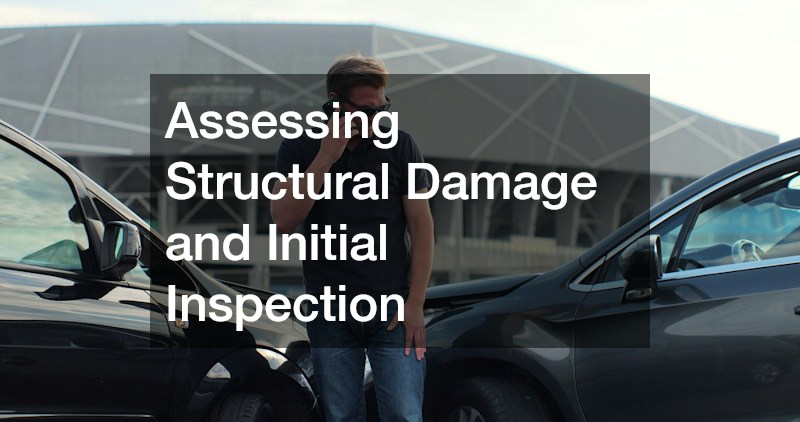
Once the vehicle reaches the repair facility, a thorough tear-down and diagnostic evaluation begin immediately. Surface damage can easily hide deeper structural compromises that affect the overall integrity of the frame or unibody architecture. Modern vehicles utilize engineered crumple zones designed to absorb impact energy, which means internal components often absorb significant force even during low-speed collisions. Skilled technicians use computerized laser measuring equipment to compare the vehicle framework against factory specifications, identifying subtle structural shifts that remain completely invisible to the naked eye during basic visual inspections.
Minor outer panel dings and shallow creases can often be resolved through paintless dent removal, a specialized technique that reshapes the metal from behind without disturbing the original factory clear coat. This process preserves the original finish and reduces repair timelines significantly when structural damage is absent. However, underlying mechanical or suspension systems must be evaluated alongside cosmetic repairs. A certified auto mechanic inspects the subframe, steering linkages, control arms, and axle assemblies to confirm that kinetic energy from the impact did not fracture or bend vital mechanical components. Detecting hidden structural or mechanical alignment issues early prevents accelerated uneven tire wear, poor fuel economy, and handling instability down the road.
Engine, Drivetrain, and Mechanical Diagnostics
A front-end or side impact can severely disturb the vehicle’s power plant, electrical harnesses, and drivetrain systems. Radiators, cooling lines, air conditioning condensers, and engine mounts are particularly vulnerable during front collisions. Fluid leaks from cracked transmission pans or severed cooler lines can starve critical components of vital lubrication, leading to catastrophic internal mechanical failure if the engine continues to operate after the crash occurs. Diagnostic scanning tools must be plugged into the vehicle’s onboard computer to detect pending fault codes that might not immediately illuminate a dashboard warning light.
The kinetic forces of a severe collision can also damage sensitive braking hardware, causing caliper binding, cracked rotor surfaces, or ruptured hydraulic lines. Performing a complete brake replacement on affected wheels restores stopping power and ensures hydraulic integrity across all four corners. Facilities that handle complete repairs usually house all necessary diagnostic technology under one roof. Transporting the vehicle to a well-equipped auto shop eliminates the hassle of shuttling the car between different specialty garages, ensuring that mechanical diagnostics, electrical troubleshooting, and structural work proceed in tandem under unified management and rigorous oversight.
Restoring Structural Integrity and Metalwork
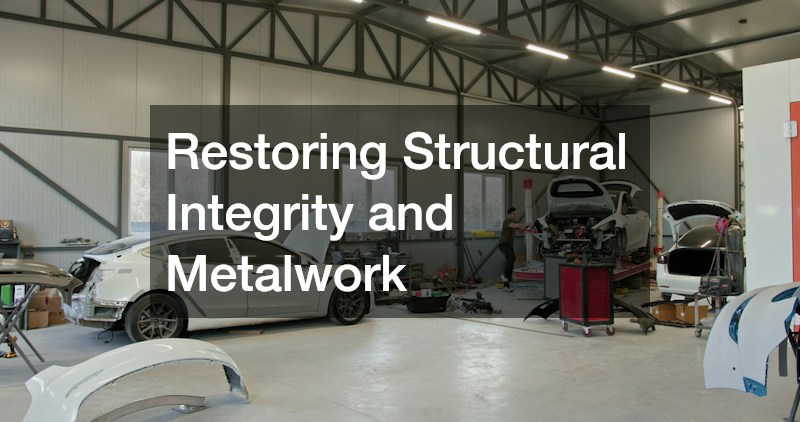
Rebuilding a damaged vehicle requires precision metalworking and strict adherence to original equipment manufacturer repair guidelines. When critical structural rails or main side pillars suffer major physical deformation after an impact, technicians must use hydraulic frame-straightening equipment to pull the metal back into exact alignment. If high-strength steel or aluminum components are stretched beyond safety tolerances, those sections must be cleanly removed and replaced according to precise factory welding procedures. Using incorrect welding techniques, improper heat applications, or non-approved replacement panels can severely compromise occupant safety during future impacts.
After structural alignment is restored, technicians focus on exterior panel fitment and gap uniformity across the entire body. Doors, fenders, hoods, and trunk lids must line up perfectly to maintain proper weather sealing and aerodynamic flow. Once the metal panels are smoothed and prepped, applying high-grade auto paint in a climate-controlled spray booth restores the factory finish and seals the bare metal against corrosion. Choosing a reputable auto body shop ensures that color-matching computer systems precisely recreate the original color, blending the fresh paint smoothly into adjacent undamaged panels so the repair remains completely invisible even under direct bright sunlight.
Refinishing and Glass Restoration Requirements
Vehicle safety relies heavily on clear visibility and structural rigidity provided by the glass assembly. During an accident, windshields and window glass often shatter, crack, or suffer hidden stress fractures. The front windshield is actually a structural component of modern unibody vehicles, contributing up to thirty percent of the cabin’s structural strength in a rollover event and providing backing support for passenger airbag deployment. Neglecting minor cracks or installing glass improperly severely compromises passenger safety during subsequent impacts or sudden stops.
Scheduling a certified auto glass replacement service guarantees that high-grade laminated glass is bonded using commercial polyurethane sealants. Proper curing time must be allowed before the vehicle is driven to ensure the seal reaches full bond strength and seal integrity. While major impact collision zones always require full panel or glass replacement, minor cosmetic blemishes on non-structural panels can still be corrected using paintless dent removal techniques. Combining these targeted repair strategies allows technicians to restore both the glass and the bodywork to factory standards quickly and cost-effectively without sacrificing overall vehicle structural integrity. This dual approach saves vehicle owners both time and financial resources while maintaining pristine factory aesthetics and long-term vehicle structural strength.
Braking Systems and Critical Safety Testing
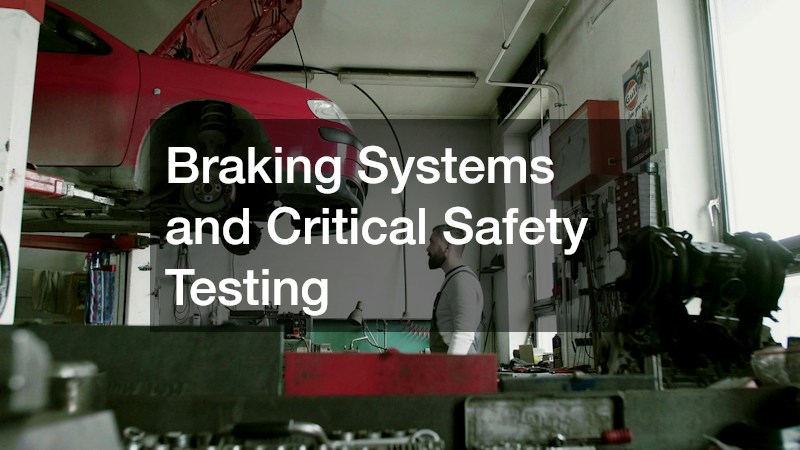
Before any vehicle is cleared for customer pickup, every mechanical system involved in or near the collision zone must undergo rigorous operational testing. Suspension geometry and wheel alignment must be adjusted to precise factory tolerances to prevent pulling, drift, or accelerated tire wear. Emergency braking systems, antilock brake sensors, and traction control modules require electronic recalibration to ensure they respond accurately during sudden stops or evasive maneuvers on unpredictable road surfaces.
Having a qualified auto mechanic conduct a multi-point road test under controlled conditions ensures that mechanical components perform reliably under real-world driving loads. The technician checks for unusual vibrations, fluid leaks under operating pressure, and abnormal noise during turning or braking. If test drives reveal uneven pad wear or lingering brake pedal softness, performing a brake replacement guarantees that fresh friction materials and flushed brake fluid provide optimal stopping performance. Comprehensive testing offers complete confidence that the vehicle is fully restored to pre-accident operating condition before returning to daily commuter driving duties. Skipping rigorous post-repair road testing risks leaving undetected mechanical faults that could compromise long-term occupant safety and everyday driving performance.
Advanced Driver Assistance System Recalibration
Modern automobiles are equipped with complex Advanced Driver Assistance Systems, often referred to as ADAS. These systems rely on a network of radar sensors, cameras, and ultrasonic detectors mounted behind bumpers, windshields, side mirrors, and front grilles. Even a minor fender bender can shift a sensor alignment by a fraction of a degree, causing blind-spot monitors, lane departure warnings, and automatic emergency braking to malfunction or trigger false alarms during routine operation on busy highways.
Recalibrating these electronic safety features requires specialized calibration targets, laser alignment tools, and computer diagnostic software. After all bodywork and auto paint application steps are finalized on outer body panels, technicians align the sensor modules according to precise millimeter tolerances. Skipping this crucial step can leave safety systems operating incorrectly when driver assistance is needed most. In addition, installing specialized aftermarket items or non-standard auto accessories like brush guards or altered grilles must be done carefully to avoid blocking the field of view of forward-facing radar and camera systems. Proper calibration ensures that complex safety technologies work in perfect harmony with physical vehicle body repairs on roads.
Quality Inspections and Final Detail Work
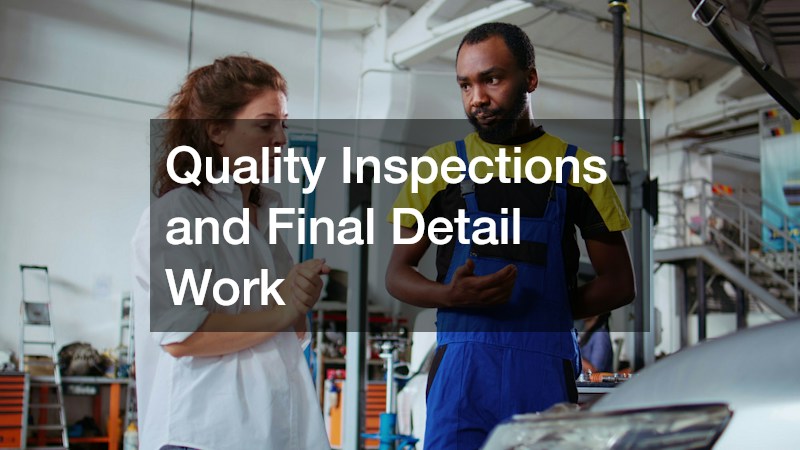
The final stage of the recovery process involves comprehensive quality control checks and thorough interior and exterior detailing. Quality assurance inspectors walk around the entire vehicle under high-intensity lighting to verify panel gaps, surface smoothness, and paint matching. Doors, hood, and trunk latches are tested repeatedly to ensure effortless operation and proper seal engagement. The interior is vacuumed and detailed to remove any microscopic glass shards or sanding dust lingering from the repair process.
Selecting a top-tier auto shop ensures that quality control encompasses both cosmetic appearance and mechanical integrity. If glass components were replaced during the repair, technicians test the weather seals using high-pressure water sprays to confirm zero leaks around the cabin. Utilizing an experienced auto glass replacement service prevents water intrusion that could damage sensitive internal electronics or ruin cabin upholstery over time. A spotless, fully inspected, clean vehicle delivered to the owner signifies meticulous attention to detail throughout the entire restoration process from start to finish. This rigorous quality assurance standard ensures every single vehicle leaves the garage in pristine mechanical condition and completely roadworthy.
Long-Term Maintenance and Post-Repair Preparedness
Returning to the road after a major vehicle repair brings relief, but ongoing vigilance ensures long-term safety and value retention. Owners should review all repair documentation, warranty details, and parts receipts provided by the repair facility. Keeping these records organized helps maintain the vehicle’s resale value and provides documentation should any post-repair issues arise later. A follow-up inspection after driving the vehicle for a few hundred miles allows technicians to double-check torque settings on wheels and inspect fluid levels to verify proper operation under normal commuting conditions.
To stay prepared for future unexpected road hazards, vehicle owners should keep contact numbers for a dependable towing service saved in their mobile phones. Equipping the trunk with useful auto accessories, such as a heavy-duty jump starter, tire pressure gauge, emergency flares, and a basic tool kit, provides extra security on long road trips. Following a structured repair plan and maintaining proactive vehicle care routines ensures that an accident remains a temporary setback rather than a permanent compromise to vehicle safety, performance, and longevity. Taking these proactive steps empowers drivers to navigate unexpected road incidents with confidence and peace of mind.
In addition, establishing a strong relationship with certified automotive repair specialists ensures that future routine maintenance is handled by skilled technicians who understand the full repair history of the vehicle. Drivers who prioritize consistent upkeep protect both their passengers and their financial investment across many years of vehicle ownership.
